EV Buying Guide 2026: Understanding the 6 Pillars of Ownership
A beginner-friendly guide explaining the 6 pillars of EV ownership in 2026, including battery types, charging levels, range anxiety, and total cost of ownership.
Navigating the shift from gasoline to electricity is one of the most significant changes a driver can make in 2026. This guide breaks down the 6 essential pillars of electric vehicle (EV) ownership, from range and charging to total cost and incentives, to help you decide if a plug-in lifestyle fits your needs.
1. Understanding the Different Types of Electric Vehicles
Before you look at specific models, you must understand that not all "electric" cars work the same way. In 2026, the market is primarily divided into three categories. Choosing the right one depends on how much you rely on gasoline as a safety net.
Battery Electric Vehicles (BEVs)
These are fully electric cars. They do not have a gasoline engine, a tailpipe, or a fuel tank. They rely entirely on a large battery pack to power one or more electric motors. Examples include the Tesla Model 3, Ford Mustang Mach-E, and Hyundai IONIQ 6. These offer the lowest "fuel" costs but require a commitment to charging infrastructure.
Plug-in Hybrid Electric Vehicles (PHEVs)
A PHEV has both an electric motor and a gasoline engine. You can drive 30 to 50 miles on pure electricity—perfect for daily commutes—and the gas engine kicks in for long road trips. However, you must plug them in daily to get the most benefit; otherwise, you are just hauling a heavy, unused battery around.
Hybrid Electric Vehicles (HEVs)
Standard hybrids, like the Toyota Prius, cannot be plugged in. They use a small battery to assist the gas engine and improve fuel efficiency. While they are more efficient than traditional cars, they are not considered "true" EVs because they cannot operate for long periods without burning gasoline.
2. Decoding Range and "Range Anxiety"
Range is the total distance an EV can travel on a single charge. In 2026, the average new EV offers between 250 and 350 miles of range. While this sounds like plenty, new owners often experience "range anxiety"—the fear of running out of power before reaching a charger.
Real-World vs. Advertised Range
Just like a gas car’s MPG, an EV's range varies based on external factors. Cold weather is a significant factor; lithium-ion batteries are less efficient in freezing temperatures, sometimes losing 20-30% of their range. High-speed highway driving also drains the battery faster than city driving because electric motors are most efficient in stop-and-go traffic where they can use regenerative braking.
3. The Three Levels of Charging
Charging is the most significant lifestyle adjustment for new EV owners. You no longer spend five minutes at a gas station once a week; instead, you "top off" your car while it sits idle, much like your smartphone.
- Level 1 (The Emergency Option): This uses a standard 120-volt household outlet. It adds only about 3-5 miles of range per hour. It is best suited for PHEVs or drivers with very short commutes.
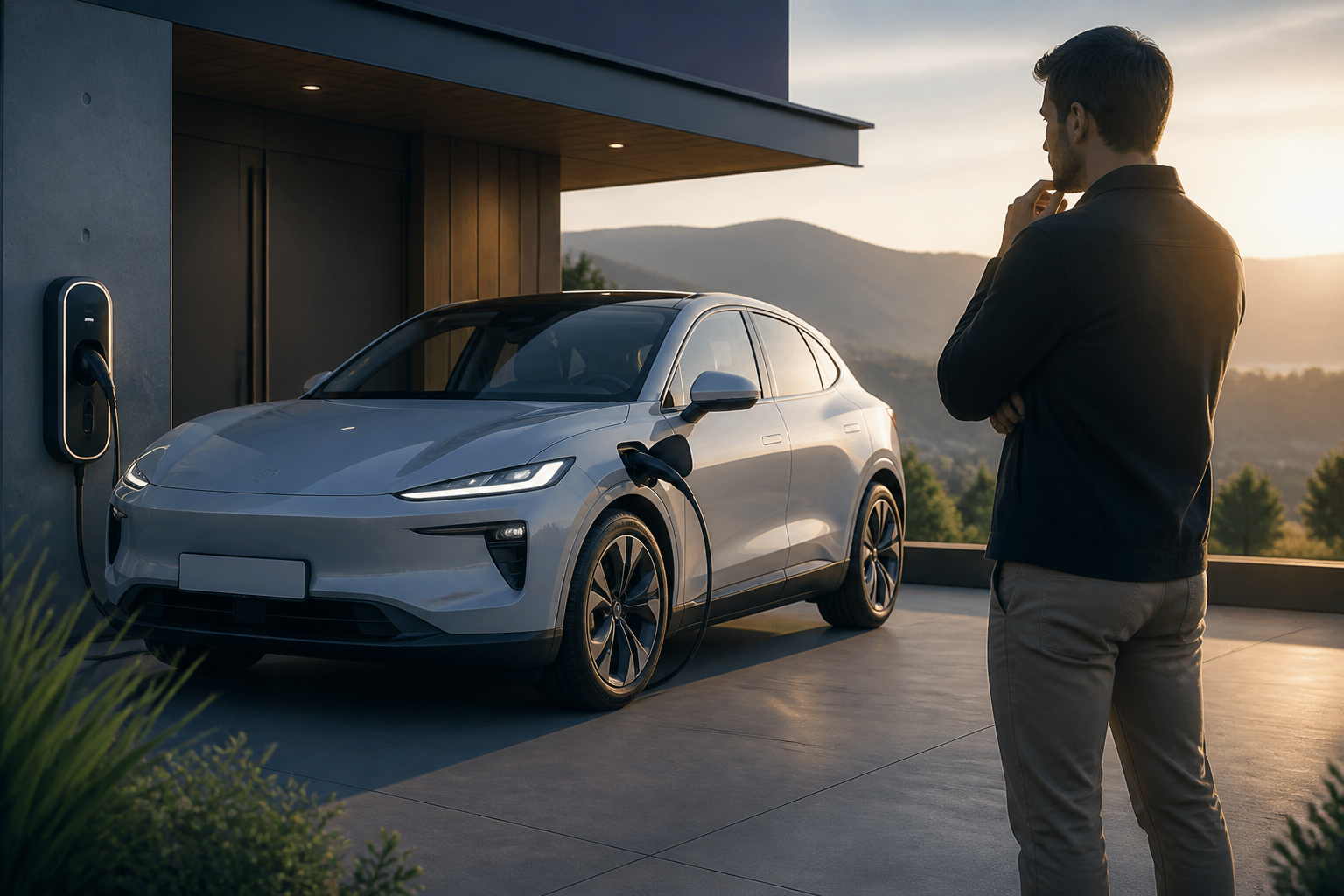
- Level 2 (The Home Standard): This requires a 240-volt outlet. This is the gold standard for home charging, adding 25-40 miles of range per hour.
- Level 3 (DC Fast Charging): These are high-powered stations found at highway rest stops. They can charge an EV from 10% to 80% in as little as 18 to 30 minutes.
A common mistake is thinking you need to charge to 100% every time. To preserve battery health, most manufacturers recommend charging to 80% for daily use.
4. Analyzing the Total Cost of Ownership
The "sticker price" of an EV is often higher than a gas car, but the math changes over time. In 2026, the total cost of ownership (TCO) is often lower for EVs due to fuel and maintenance savings.
Energy Savings
Electricity is almost universally cheaper than gasoline per mile. If you charge at home during "off-peak" hours, your costs can be significantly lower. The efficiency of an electric motor (which converts over 85% of energy into motion) far outpaces an internal combustion engine.
Maintenance Reductions
Electric vehicles have significantly fewer moving parts. There are no oil changes, spark plugs, or timing belts. Because of regenerative braking, even your brake pads will last twice as long as they would on a gas car.
5. Evaluating Battery Longevity and Health
The battery is the most expensive component of an EV. Most manufacturers in 2026 provide a battery warranty for 8 to 10 years or 100,000 miles, guaranteeing that the battery will retain at least 70% of its original capacity.
Modern EVs use sophisticated Thermal Management Systems to keep the battery at an optimal temperature, significantly extending its life compared to early electric cars. Avoid frequent Level 3 fast charging and extreme heat to maintain peak health.
6. Navigating Incentives and Tax Credits
The final pillar of buying an EV is understanding the financial incentives available in 2026. Governments and local utilities often provide tax credits or rebates to offset the higher purchase price of an electric car.
Before purchasing, check if the specific model qualifies for federal tax credits, which in 2026 are often applied directly at the point of sale. Additionally, many utility companies offer rebates for installing a Level 2 home charger, making the transition to electric even more affordable.
Conclusion
Buying an electric vehicle in 2026 is no longer an experiment; it is a practical choice for millions. By understanding these 6 core items—from the type of motor to available tax incentives—you can make an informed decision that benefits both your wallet and the environment. Your next step is to evaluate your home's electrical capacity to ensure you are ready for a seamless charging experience.